Harry Potter Room Ideas for a Magical Bedroom and Study Space
June 1, 2026 | By Gideon Finch
A good Harry Potter room should feel magical before it looks crowded. The best designs do not begin with every scarf, wand, poster, and potion bottle you can find; they begin with a mood. Do you want the warmth of a common room, the secrecy of a room under the stairs, the curiosity of a class room, or the practical wonder of the Room of Requirement? Once you choose that feeling, the colors, furniture, lighting, and decorations become much easier to edit. If you are not sure which house mood fits you, a house-inspired starting point can help turn a broad idea into a room that feels personal rather than random.
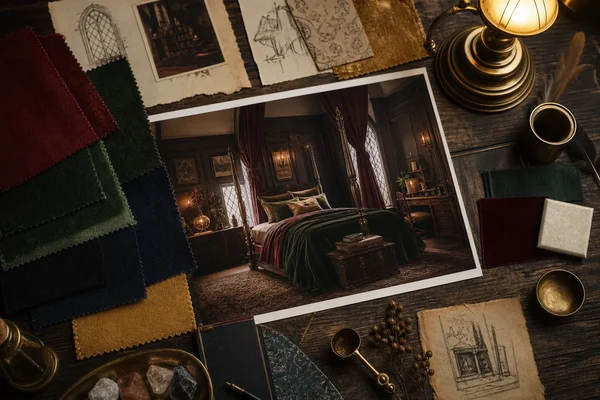
Start With the Feeling, Not the Merchandise
Many Harry Potter room ideas fail because they treat the room like a shelf for collectibles. That can be fun, but a bedroom or study still has to work as a real space. Begin with three words that describe how the room should feel. "Cozy, old, and secret" leads to a very different plan from "scholarly, bright, and Ravenclaw-coded" or "dramatic, green, and candlelit."
This also keeps the theme flexible for kids, teens, and adults. A younger fan might want banners, plush owls, and house posters. An adult fan may prefer leather-bound books, warm sconces, a vintage trunk, botanical prints, and a few subtle magical objects. Both can read as a Harry Potter room, but they use different levels of literal decoration.
The room in Harry Potter that inspires you matters too. Harry's cupboard under the stairs suggests small-space coziness and hidden storage. The Gryffindor common room suggests warm textiles, red and gold accents, and a fireplace feeling. The Room of Requirement suggests modular storage and a space that changes with your needs. Hogwarts classrooms suggest shelves, labels, specimen jars, maps, candles, and study corners.
Choose a Room Concept That Fits Your Space
Before buying decor, decide which concept matches your actual room. A magical design works best when the fantasy supports the layout instead of fighting it.
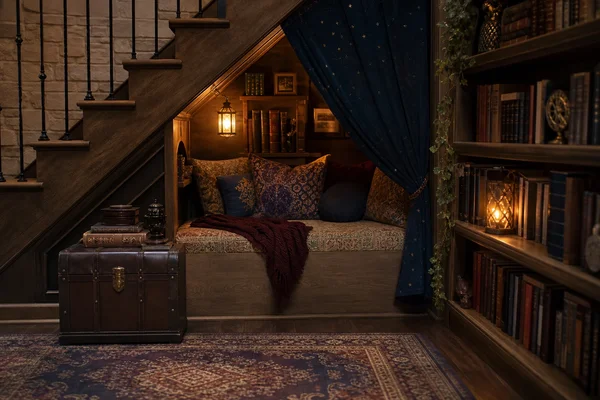
A Cozy Harry Potter Room Under Stairs
A Harry Potter room under stairs works beautifully as a reading nook, homework cave, game corner, or small guest alcove. The key is to make the small size feel intentional. Add a low bench or floor cushion, a narrow shelf, warm battery candles, a small framed mirror, and a curtain or wood-toned panel to define the entrance. Use vertical storage so the nook feels tucked away, not cramped.
For safety and comfort, keep the floor clear, avoid real candles in tight spaces, and make sure the nook has enough light. If the space is for a child, use soft edges, washable fabrics, and easy-to-reach baskets for books or toys. The magic comes from texture and atmosphere, not from making the space difficult to use.
A Common-Room Bedroom
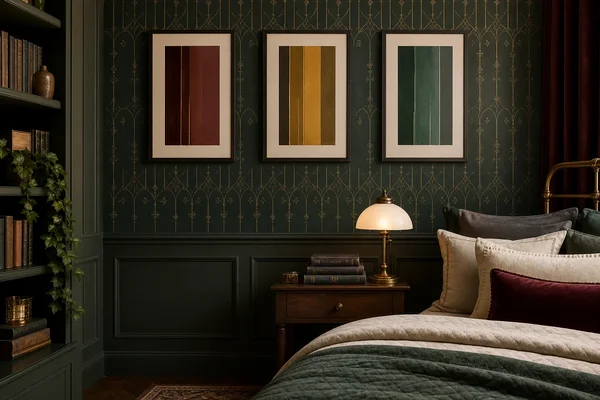
If you want the room to feel like a Hogwarts common room, choose one house as the anchor. Gryffindor leans into rich red, gold, dark wood, and bold textiles. Slytherin can feel elegant with emerald, silver, black, glass, and polished metal. Ravenclaw works well with blue, bronze, books, sky charts, and airy study details. Hufflepuff can feel warm and grounded with yellow, black, plants, baskets, and soft blankets.
If you are unsure which mood suits the person using the room, reflect on your Hogwarts house personality before choosing the palette. A house theme should feel like a living identity cue, not just a color assignment.
A Grown-Up Magical Study
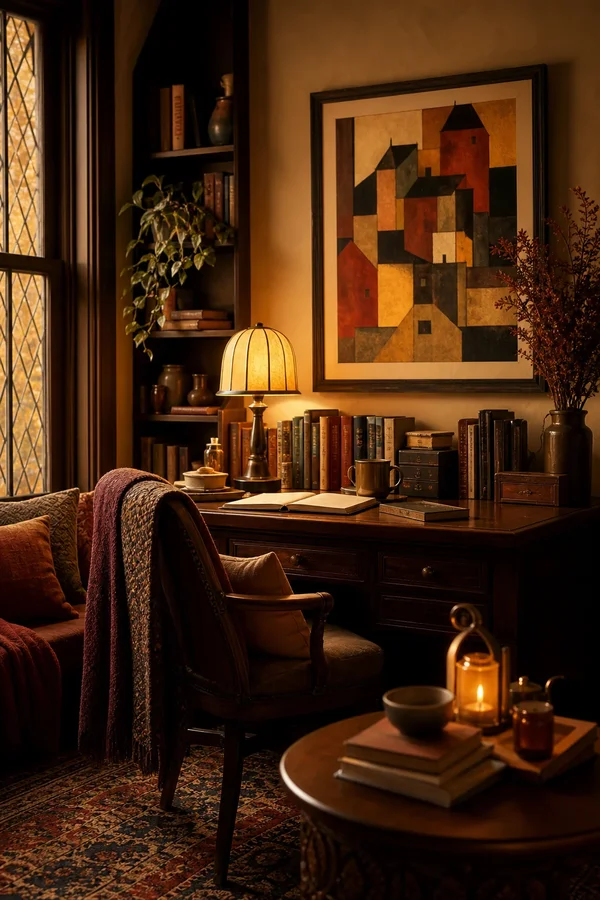
Harry Potter bedroom ideas for adults usually work best when the references are layered. Start with a functional desk, a comfortable chair, and storage that hides clutter. Then add antique frames, a brass lamp, deep wall color, constellation art, potion-style bottles, or a framed quote-style print with original wording. The result can feel magical without looking like a children's party aisle.
For a shared living room or dining room, keep the theme even quieter. Use one display shelf, one statement wall, or one seasonal tray rather than spreading small objects everywhere. A subtle magical room often lasts longer because it still looks good when you are not in full fandom mode.
Use Color Like a House Signal
Color is the fastest way to make a Harry Potter room theme readable. It also has the highest risk of becoming too obvious. Instead of painting everything in house colors, use a 60-30-10 approach: 60 percent neutral base, 30 percent house mood, and 10 percent magical accent.
For Gryffindor, try warm cream walls, dark wood furniture, burgundy bedding, and small gold details. For Slytherin, pair charcoal or ivory with emerald textiles and silver frames. For Ravenclaw, keep the room calm with navy, slate blue, cream, and a few bronze accents. For Hufflepuff, use warm neutrals, honey yellow, black linework, plants, and natural fibers.
Wallpaper can help, but it should not overpower the room. A Harry Potter room wallpaper idea works best on one wall, inside a reading nook, behind a desk, or as peel-and-stick backing inside a bookshelf. Look for patterns that suggest old libraries, stars, vines, stone, parchment, or vintage maps. A room covered in busy symbols can feel smaller and harder to rest in.
Posters need the same restraint. Rather than covering every wall, build one gallery area with matching frames. Mix room posters with original fan-safe art, house-color abstracts, old-style maps, botanical sketches, and shelf objects. A framed poster looks more intentional than a loose poster taped above a bed.
Harry Potter Room Decor DIY That Looks Intentional
DIY is where the room can become personal. It also helps avoid making the design feel like a catalog. Pick two or three projects that support the room concept.
Make a Potion Shelf
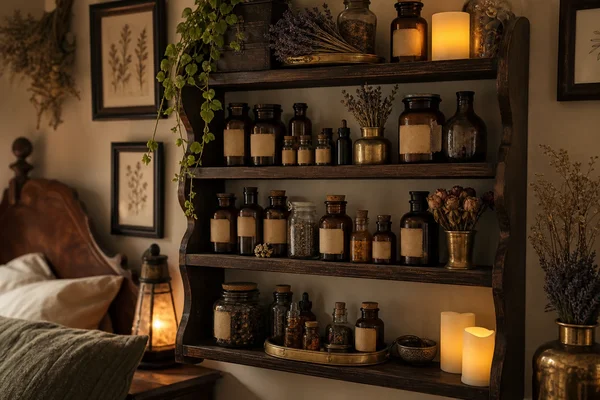
A potion shelf is simple and high-impact. Reuse small bottles, jars, and vases. Fill them with colored water, dried herbs, beads, glitter, or rolled paper. Add hand-cut labels with invented names rather than copied branding. Group the bottles on a tray or narrow shelf so the display feels curated.
For a child's room, seal bottles tightly and skip anything breakable near the bed. For an adult room, keep the palette limited: amber glass, black labels, cream paper, brass, and dark green plants can look surprisingly sophisticated.
Build a Better Poster Wall
Harry Potter room posters can look polished if you treat them like a gallery wall. Choose one frame color, keep spacing consistent, and mix large and small pieces. Add one mirror or sconce to break up the rectangles. If the room is small, stop at five to seven framed pieces.
You can also create your own house-inspired prints with simple icons: stars, keys, books, crowns, snakes, lions, cups, feathers, badger-like woodland motifs, or abstract color fields. Keep them original, and avoid copying official crests or movie graphics.
Use Everyday Objects as Magical Props
Room decor DIY does not have to mean complex crafting. A wooden trunk can hold blankets. A desk organizer can become a spellbook station. A thrifted frame can hold a map-style print. Battery candles can sit inside lanterns. A velvet pillow can make a bed feel more like a dormitory. The trick is to repeat materials: wood, brass, glass, paper, velvet, and wool.
If you shop for Harry Potter room decor on Amazon or other marketplaces, check size, material, reviews, and whether the item is officially licensed if that matters to you. Use purchased pieces as accents, not the entire design. A room feels more magical when it has layers, not just products.
Design for Kids, Adults, and Shared Rooms
For kids, prioritize washable fabrics, soft lighting, clear storage, and flexible wall decor. Peel-and-stick decals, framed posters, and bedding are easier to update than painted murals. Leave space for toys and school items so the theme does not become clutter overnight.
For teens, give the room a stronger identity. A house-color bedspread, a desk wall, LED-safe warm lighting, and a reading chair can make the room feel immersive without taking away practical space. Let them choose which common room mood fits them; forced house decor rarely feels right.
For adults, focus on restraint and material quality. A magical bedroom can use moody paint, layered curtains, a dark wood desk, an old-library lamp, framed art, and one shelf of fandom pieces. In a living room, a single common-room corner may be better than a full-room transformation.
For shared rooms, set a theme boundary. One person might love a potion room look while another prefers a clean study. Solve that with zones: a themed shelf, a reading chair, a gallery wall, or a desk corner. The rest of the room can stay neutral.
A Simple Room Plan You Can Build in a Weekend
Use this quick plan if you want the room to feel magical without a full renovation.
- Choose one room concept: under-stairs nook, common-room bedroom, study corner, potion room, or Room of Requirement storage zone.
- Pick a base palette with one house-inspired accent color.
- Remove anything that does not fit the mood, especially mismatched clutter on shelves.
- Add warm layered lighting: lamp, lantern, wall sconce, or battery candles.
- Create one focal point, such as a framed poster wall, bed canopy, reading chair, or potion shelf.
- Add two textures: velvet, wool, aged wood, brass, parchment paper, woven baskets, or glass.
- Leave one blank area so the room can breathe.
This method works because it limits decisions. You are not trying to recreate every room in Hogwarts. You are choosing one emotional doorway into the world and making the real room support it.
Make the Harry Potter Room Feel Like Yours
The most memorable Harry Potter room is not the one with the most decorations. It is the one that understands the person living in it. If the room is for a brave, high-energy child, a Gryffindor-style color accent and poster wall may be perfect. If it is for a quiet reader, a Ravenclaw or Room of Requirement study corner may feel more natural. If it is for someone who loves mystery, a Slytherin-inspired palette can feel dramatic and elegant. If comfort matters most, Hufflepuff warmth is hard to beat.
Treat the theme as a conversation between fandom and daily life. Keep the bed restful, the desk usable, and the storage honest. Then add the magical touches where they will be seen and enjoyed: the first shelf by the door, the reading light, the wall above the desk, or the hidden nook under the stairs. For a low-pressure way to explore the house mood behind your design, you can use a playful house quiz as a creative prompt, then translate the result into colors, textures, and objects you genuinely like.
FAQ
What was Harry Potter's room called?
At the Dursleys' house, Harry's first sleeping space is usually described as the cupboard under the stairs. Later, he sleeps in Dudley's second bedroom and, at Hogwarts, in the Gryffindor dormitory. For room decor, "Harry Potter's room" often refers to the cupboard-under-stairs idea because it is such a memorable small-space image.
What is the room in Harry Potter?
People may mean different rooms. The most famous magical room is the Room of Requirement, a hidden space that appears when someone truly needs it. Fans also talk about common rooms, dormitories, classrooms, the Great Hall, and Harry's cupboard under the stairs. For design, choose the room that gives you the strongest mood.
How do you design a Harry Potter room?
Start with a concept, then choose colors, lighting, furniture, and decorations that support it. Use one main focal point, such as a reading nook, poster wall, potion shelf, or house-color bed. Keep the room functional first, then add magical details in layers.
What are the 4 rooms in Harry Potter?
If the question means house spaces, the four most important rooms are the Gryffindor, Slytherin, Ravenclaw, and Hufflepuff common rooms. Each has its own mood, colors, and location. They are helpful design references because they connect room style with personality.
What is the best Harry Potter room under stairs idea?
The best under-stairs idea is a cozy reading nook with a bench, cushions, warm lighting, a narrow shelf, and hidden storage. Keep it safe, bright enough to use, and easy to clean. Small spaces feel magical when every object has a purpose.
Can adults use Harry Potter bedroom ideas without making the room childish?
Yes. Use subtle references, better materials, and fewer literal decorations. Dark wood, framed art, old-library lighting, velvet pillows, botanical details, and one curated shelf can feel grown-up while still clearly honoring the magical world.
Should I use Harry Potter room wallpaper or posters?
Use wallpaper when you want a strong background mood, especially on one accent wall or inside a nook. Use posters when you want flexibility. Framed posters are easier to change, move, and style with other art, which makes them better for renters or evolving rooms.