Hogwarts Hogwarts: The School, Song, Houses, and Meaning Behind the Name
June 16, 2026 | By Gideon Finch
"Hogwarts Hogwarts" can mean two things at once: the famous magical school itself and the playful school song many fans remember from the early books and films. If you searched the phrase because of "Hogwarts, Hogwarts, Hoggy Warty Hogwarts," you are probably looking for the mood behind the words, the place behind the song, and the lore that makes the school feel so alive. This guide explains Hogwarts School of Witchcraft and Wizardry, where it is located in the story, how the houses work, and why the school still anchors so many fan quizzes, games, and discussions. For a light fan-made way to keep exploring, you can also visit our Hogwarts-inspired quiz hub.
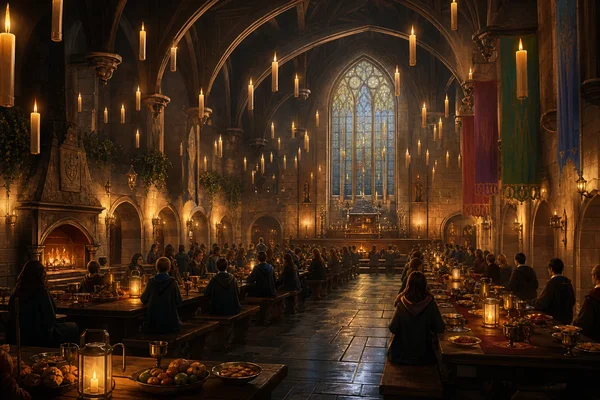
What "Hogwarts Hogwarts" Usually Means
The phrase "Hogwarts Hogwarts" often points to the school song, a deliberately silly anthem sung by students with more enthusiasm than musical discipline. The line people remember most is short, bouncy, and intentionally odd. That is part of its charm: it makes Hogwarts feel less like a flawless fantasy institution and more like a school full of noisy students, awkward ceremonies, old traditions, and shared jokes.
This article will not reproduce the full copyrighted lyrics. Instead, it looks at what the song represents. The Hogwarts school song works because it captures the whole tone of the castle: ancient but playful, dignified but chaotic, serious about learning but never too polished to laugh at itself. The repeated call of the school's name turns Hogwarts into something more than a setting. It becomes a community identity, the kind of place students can sing about even when they disagree about houses, rules, and bedtime.
That is why the search also connects naturally to the Hogwarts houses, the Sorting Hat, the school location, the castle, and the question of whether a "real Hogwarts school admission" exists. The phrase is a doorway into the larger idea of Hogwarts.
Where Is Hogwarts Located in the Story?
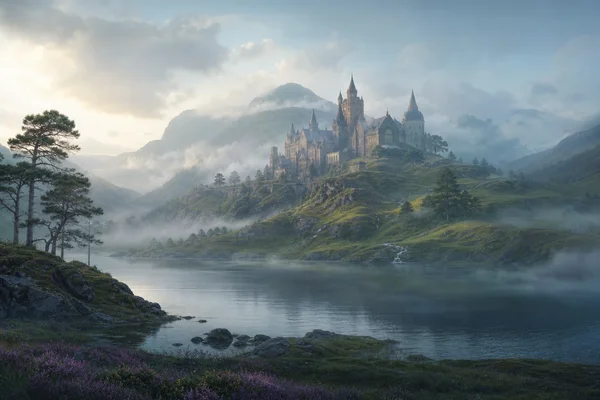
In the Harry Potter world, Hogwarts is located in Scotland, usually understood as the Scottish Highlands. It is not presented as a public tourist landmark inside the story. The school is hidden from non-magical people by enchantments, protected grounds, and a general rule that the magical world keeps itself out of ordinary view.
For readers, that hidden location matters. Hogwarts feels remote enough to be safe, strange enough to be magical, and old enough to carry secrets. The castle has towers, moving staircases, classrooms, common rooms, dungeons, greenhouses, a lake, and the Forbidden Forest nearby. It also has a train journey that turns the trip to school into a rite of passage.
If you are asking "Hogwarts in which country?" the simple answer is: in the fictional story, Hogwarts is in Scotland. If you are asking whether there is a real boarding school that accepts students by owl post, the answer is no. Real-world fans can visit filming locations, studio experiences, theme attractions, or fan events, but Hogwarts itself is a fictional school.
Hogwarts School of Witchcraft and Wizardry at a Glance
Hogwarts School of Witchcraft and Wizardry is the central magical school of the Harry Potter series. It is a boarding school for young witches and wizards, traditionally entered around age eleven after a student receives a Hogwarts letter. The school year begins with travel to King's Cross, the Hogwarts Express, and the arrival at the castle.
Here is the quick fan-friendly version:
| Hogwarts detail | What it means for fans |
|---|---|
| Type of school | Fictional magical boarding school |
| Story location | Scotland, especially the Highlands |
| Entry point | A Hogwarts letter and the journey to school |
| Core identity | Learning magic, joining a house, and growing up in a hidden world |
| Four houses | Gryffindor, Slytherin, Ravenclaw, and Hufflepuff |
| Famous spaces | Great Hall, common rooms, classrooms, lake, forest, towers, and dungeons |
| Fan appeal | A complete magical identity system, not just a castle |
The school was founded by four legendary figures: Godric Gryffindor, Salazar Slytherin, Rowena Ravenclaw, and Helga Hufflepuff. Their values became the foundation of the four houses, and the Sorting Hat keeps that tradition alive by placing new students where their traits, choices, and potential seem to belong.
Hogwarts is not only about classes. It is also about belonging, rivalry, friendship, rule-breaking, discovery, and the feeling that the building itself has a memory. That is why maps, crests, uniforms, robes, professors, secret rooms, and even staircases become search topics of their own.
How the Hogwarts Houses Shape School Life
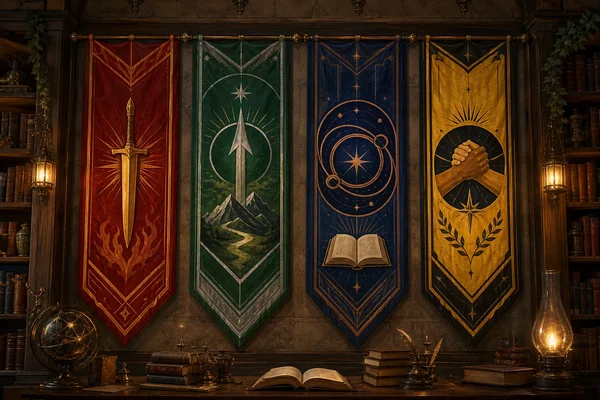
The four Hogwarts houses are one of the biggest reasons the school stays memorable. Each house gives students a smaller community inside the larger castle. It affects where they sleep, who they compete beside, which colors they wear, and how they understand their own strengths.
Gryffindor is associated with courage, daring, nerve, and bold action. Slytherin is associated with ambition, resourcefulness, strategy, and leadership. Ravenclaw is associated with learning, wit, curiosity, and independent thought. Hufflepuff is associated with loyalty, patience, fairness, and steady effort.
Good house writing avoids flattening any house into a stereotype. Gryffindor is not just reckless bravery. Slytherin is not just villainy. Ravenclaw is not just grades. Hufflepuff is not just niceness. The more interesting version of Hogwarts house identity treats each house as a cluster of values, tradeoffs, and growth paths.
That is also why many fans enjoy a fan-made Sorting Hat-style quiz. A thoughtful quiz does not need to claim official authority. It can help you reflect on whether you tend to lead with courage, ambition, curiosity, loyalty, or a blend of several traits. The best result is not a final label. It is a starting point for noticing what kind of magic feels most like you.
Classes, Professors, and Daily Life at Hogwarts
Hogwarts feels real because it has a school rhythm. Students do not simply wander the castle having adventures. They attend lessons, learn spells, write essays, practice potion-making, study magical plants, look at the stars, care for magical creatures, and prepare for major exams.
Commonly remembered subjects include Charms, Potions, Transfiguration, Herbology, Defence Against the Dark Arts, History of Magic, Astronomy, and later electives such as Divination, Care of Magical Creatures, Arithmancy, and Ancient Runes. Some classes are practical and dramatic. Others are slow, difficult, or strange. Together, they make Hogwarts feel like a living school rather than a backdrop.
Professors add another layer. A Hogwarts professor is often more than a teacher. They may be a head of house, a mentor, a rival presence, a mystery, or a moral test. Students also live under school rules, house points, detentions, prefects, exams, and traditions that make the castle feel both protective and unpredictable.
Daily life is also shaped by the Great Hall, common rooms, Quidditch, Hogsmeade weekends for older students, feast days, and house competitions. The school song fits into this pattern because it is a communal ritual. It is silly, but it still says: we are all part of Hogwarts, even when we sing badly and in different tempos.
Hogwarts in Movies, Games, and Fan Culture
For many fans, Hogwarts first became vivid through the films. The screen version turned the castle into a visual icon: high towers, candlelit halls, stone corridors, sweeping staircases, and the sense that every door might hide a secret. Real filming locations and studio models helped shape that look, but the finished Hogwarts is still a fictional construction of story, design, music, and imagination.
Games expanded the feeling of walking through the school. Hogwarts Mystery lets players live through years at the school, customize a student, attend classes, and choose a house identity. Hogwarts Legacy places players in a much earlier period of wizarding history and makes the castle and surrounding areas explorable through an action role-playing format. These games serve a different search intent than a lore article, but they show the same pattern: fans want to feel that Hogwarts is a place they can enter, map, personalize, and revisit.
Fan culture does something similar without needing official access. People make house color charts, discuss robes and uniforms, compare Hogwarts maps, rank professors, build LEGO castles, write trivia questions, and debate what the Sorting Hat might see in different characters. Hogwarts survives online because it works as a shared imaginative framework. You can talk about courage, ambition, loyalty, and curiosity without making the conversation feel like a lecture.
Is There a Real Hogwarts School Admission Process?
There is no real Hogwarts admission process. No real school sends official Hogwarts acceptance letters that give access to the fictional castle, classes, or wizarding exams. Any "real Hogwarts school admission" search result should be treated as fan entertainment, roleplay, merchandise, an event, a themed experience, or a metaphor.
That does not make the idea useless. A Hogwarts letter is one of the strongest symbols in the series because it represents recognition. It tells a young person that there is more to them than they knew, that a hidden world has noticed them, and that a new identity is waiting. Fans recreate that feeling through letters, quizzes, costumes, classroom games, and house sorting activities.
If you are creating a classroom event, party, reading group, or fan activity, it is best to be clear about the boundary: Hogwarts is fictional, and fan-made experiences are for fun. That honesty protects the magic instead of weakening it. When everyone understands the frame, the fantasy becomes easier to enjoy.
A Fan-Friendly Way to Keep Exploring Hogwarts
The best Hogwarts guide does not end with a single fact. It gives you a clearer way to move through the world: the school is fictional, the story location is Scotland, the song expresses community, the houses organize identity, and the castle turns learning into adventure.
If your real question is "Where would I fit at Hogwarts?" then the school becomes personal. You may notice Gryffindor moments when you act before you feel ready, Slytherin moments when you plan carefully, Ravenclaw moments when curiosity pulls you forward, and Hufflepuff moments when you choose fairness over flash. A balanced fan reading can leave room for all four.
For that kind of reflection, our magical identity tools are meant as fan-made entertainment, not official sorting and not a professional assessment. Explore them as a playful companion to the lore: a way to think about your traits, revisit the houses, and keep the Great Hall feeling close.
FAQ
What does "Hogwarts Hogwarts" mean?
It usually refers either to Hogwarts School of Witchcraft and Wizardry itself or to the opening words fans associate with the Hogwarts school song. Searchers often use the repeated phrase when looking for the song, the school, the castle, or basic Hogwarts lore.
Can I read the full "Hoggy Warty Hogwarts" lyrics here?
No. This guide discusses the meaning and fan context of the school song rather than reproducing the full copyrighted lyrics. The important point is that the song is playful, communal, and intentionally odd, which matches the warm chaos of Hogwarts life.
Hogwarts is in which country?
In the fictional Harry Potter story, Hogwarts is located in Scotland, especially associated with the Scottish Highlands. It is hidden from non-magical people inside the story and should not be confused with a real school address.
Is Hogwarts a real school with admission?
No. Hogwarts is a fictional school. Real fans can enjoy themed attractions, studio tours, events, costumes, fan letters, quizzes, and roleplay activities, but there is no real official Hogwarts admission process.
What are the four Hogwarts houses?
The four houses are Gryffindor, Slytherin, Ravenclaw, and Hufflepuff. They are linked to different values: courage, ambition, curiosity, and loyalty are common shorthand, though each house is richer than a single trait.
Did Hermione know she was a witch?
Hermione Granger was Muggle-born, so she did not grow up in a wizarding family. She learned about the magical world after receiving her Hogwarts letter, then prepared intensely before arriving at school.
Why is Hogwarts called Hogwarts?
Within fan discussion, the name is often treated as whimsical and old-fashioned, fitting a castle full of strange traditions. Rowling has also connected the name to the hogwort plant in comments outside the story, which adds to the odd botanical feel of the word.
Was Dumbledore half-blood?
Yes, Albus Dumbledore is generally understood as half-blood in wizarding-world terms because his family background includes both magical and Muggle heritage. The label is a blood-status category in the fictional setting, not a measure of character or ability.
What is Harry Potter's favorite food?
Harry is strongly associated with treacle tart, which is often described by fans as his favorite dessert. It is one of the small food details that makes Hogwarts feasts feel memorable.